
From Wild To Tame - Training Wild Untouched Camels
Apr 27, 2026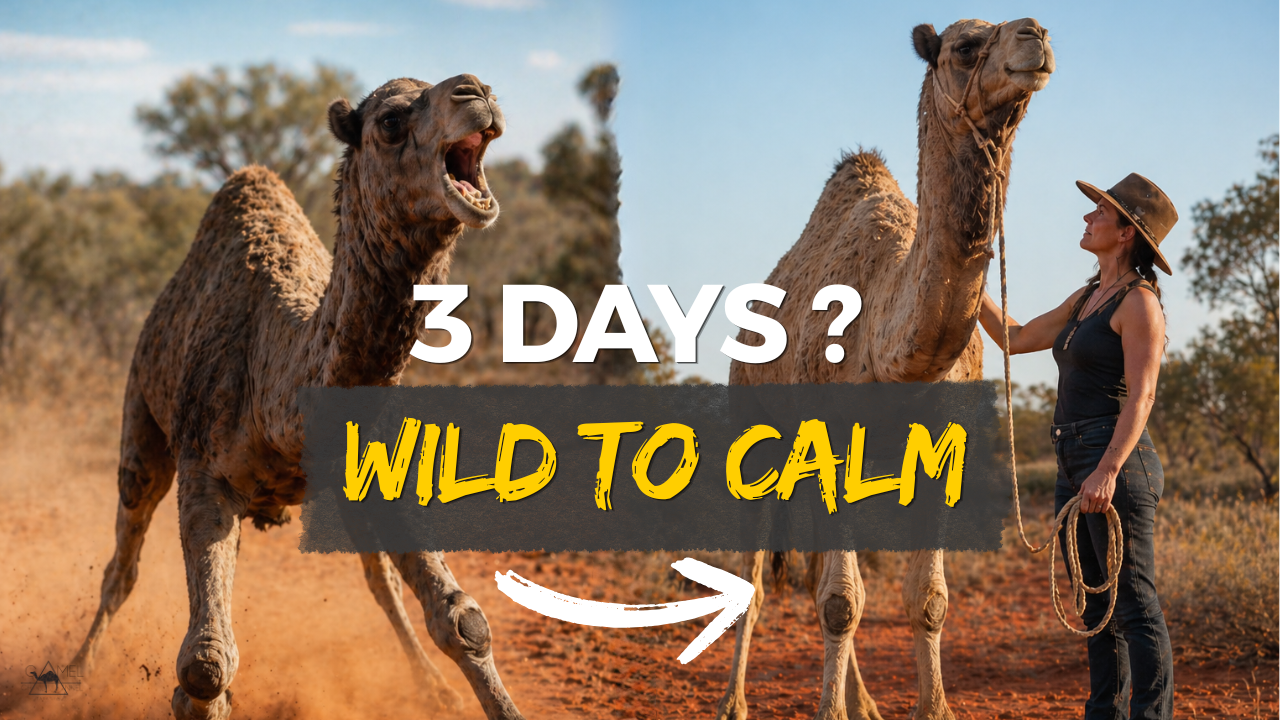
How Long Does It Take to Train a Wild Camel?
One of the most common questions I get is this: “How long does it take to train a camel? It must be hard, especially one that’s never been touched?”
I love this question, because the answer might surprise you.
I’m not talking about a handled camel born and raised in a domestic environment — I’m talking about a camel that’s come straight from the outback. Untouched. Undomesticated. Untamed. A complete blank slate. So… how long does it take?
It’s Not Just About Time — It’s About the Process
Before I give you a timeframe, it’s important to understand this:
It’s less about how long it takes and more about how the process is done, because the process is everything.
Let’s start from the beginning…
From the Wild to the Yards
In Australia (where I reside), camels are often mustered from the outback using helicopters, motorbikes, and vehicles. They’re brought into yards — sometimes for the very first time in their lives.
Imagine that for a moment. A wild camel, who has never seen fencing, humans up close, or confinement, suddenly finds itself in a yard with hundreds of others.
They’re stirred up, alert, and unsure. The best thing you can do at this stage?
Leave them alone.
Let them settle.
Let them process.
Space and time to calm down is everything.
The flow-on effect of this is that it allows the handlers to calm down from the heightened adrenaline state of the mustering process. Stress on both animals and humans is unavoidable.
How to Choose the Right Camel
The next step is selection.
Not all camels are suited to your specific needs, and choosing the right one is a skill in itself.
If you’re wanting a camel to “work,” i.e. ride or carry loads, the camel’s body composition, age, and personality need to be considered.
If you’re seeking a therapy or pet camel, then personality and curiosity are key factors, and so on.
It can take a full day (or more) to select just a handful from a large herd. But here’s the key point: selection is not training — it’s preparation. The real work begins after that.
The Truth About Camel Training Timeframe
Here’s where things get interesting…
In my experience, it doesn’t take long at all to initially train a camel. We’re talking about around three days to achieve foundational training.
Yes — three days — from wild and untamed to a bonded, connected, and commendable camel.
That includes:
- Catching safely
- Leading
- Tying up / Pressure Release
- Desensitising
- Teaching them to sit (“hoosh”)
- And beginning that human-camel connection.
Why Untouched Camels Are Actually Easier
This might sound counterintuitive, and it always surprises people when I say it…
I actually prefer working with untouched camels.
Why? Because they’re a clean slate.
They don’t have confusion from inconsistent handling, bad habits, fear based on past human interactions, or a lack of clear leadership and boundaries.
You get to show them, from day one, what a human can be — a trusted and compassionate leader.
And that changes everything.
The Power of a Clear Camel Training Process
Years ago, this kind of foundational training would take 5–7 days. But over time, I refined the process.
Not by rushing it — but by removing what wasn’t necessary, by understanding the camel better, by improving the timing, by working on the camel's timeframe and by focusing on connection first.
Now, that same foundation can be achieved in three days — without compromise. And it works! Over and over again, especially with camels that have never been handled before.
Could It Take Longer?
Absolutely. You could take five days. You could take longer.
There’s nothing wrong with that. But the truth is...
With the right approach, the right mindset, and the right understanding of camel behaviour — it doesn’t need to take long.
Learn How To Train Camels
Training a camel isn’t about forcing results. It’s about building trust, creating safety, and working with the animal — not against it.
And when that happens, things that seem impossible become surprisingly simple.
If you’re working with camels — or thinking about it — this is your reminder: it’s not about time, it’s about connection and your willingness to strip back your own personal fears and expectations.
If you’d like to learn the psychology of The Camel and how training them can be a positive life changing experience for both camel and handler the Calm Camel Training Method is for you.
You can learn this method in online Academy (free trail) or by attending an in-person course.
Should Wild Camels Just Be Left Alone?
I often hear the idea that Australia’s wild camels should simply be left alone to roam free in the outback.
At first, that sounds like the kindest option. But when you look a little deeper, it’s not quite that simple.
Camels were introduced to Australia in the mid-1800s to help “open up the outback,” transporting supplies like water, food, and railway sleepers, and playing a major role in building infrastructure such as the Overland Telegraph Line and The Ghan Railway.
When they were no longer needed, many were released — and from there, populations grew.
These days, when camels are left unmanaged, they are often subject to government culling programs that have been in place for many years. And with populations capable of doubling every 8–10 years, doing nothing isn’t always the most compassionate outcome.
So while “leaving them be” sounds right on the surface, the reality is that it often leads to more camels being shot.
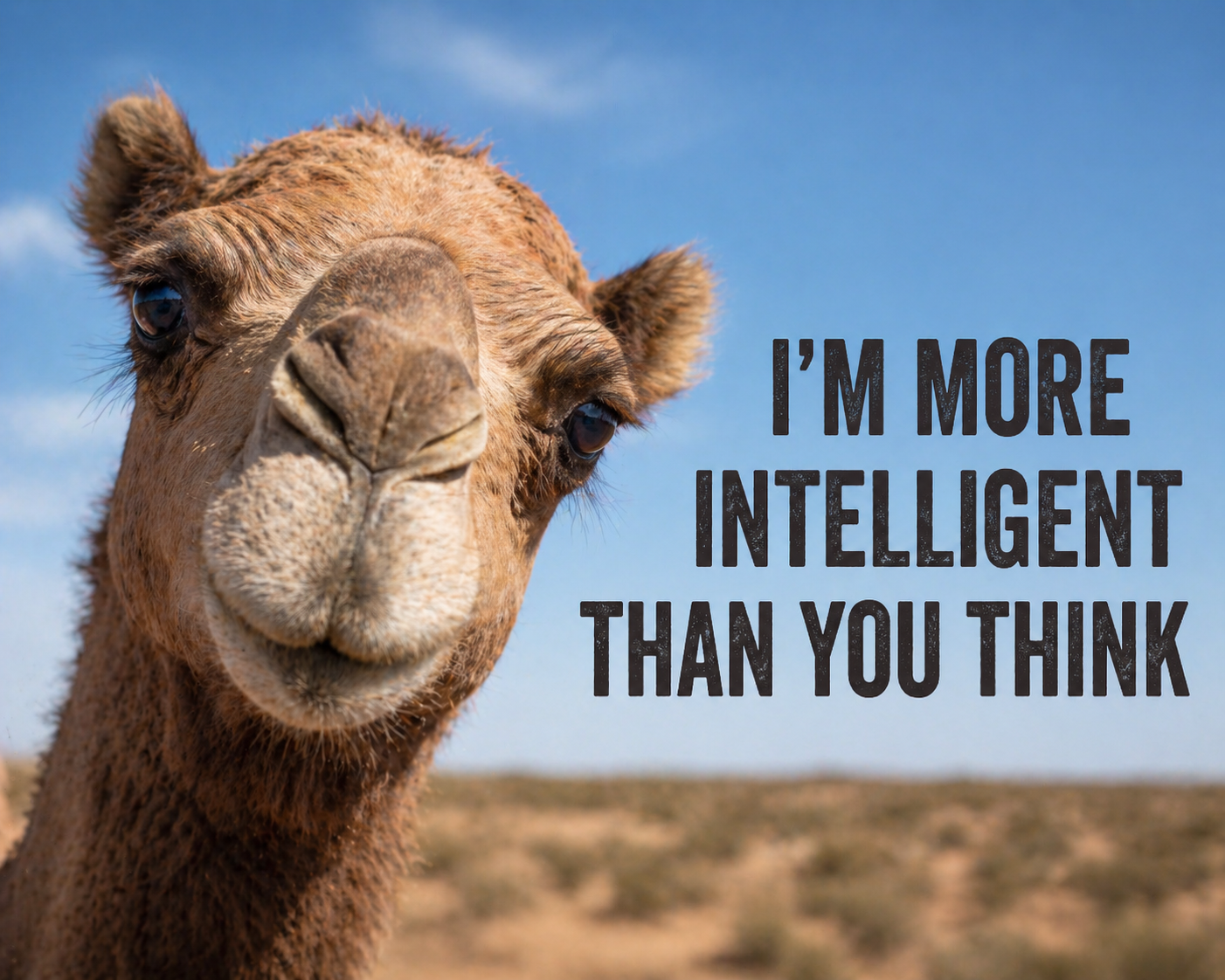
From my perspective, if even a small number of people can make an impact on a few camels’ lives — and show just how intelligent and trainable they really are — then that’s where things begin to shift.
Because awareness leads to understanding, and understanding creates the potential for a more sustainable camel industry — one that supports both people and camels.
Want to Learn More About Camel Training? (How I can help you):
🐪 In-person Calm Camel Training Course
💻 Online Calm Camel Training Course (Free Trial)
📲 Book a free Camel Chat to discuss your individual camel goals

Get Your Free Copy:
Introduction to Camels eBook
We hate SPAM. We will never sell your information, for any reason.

